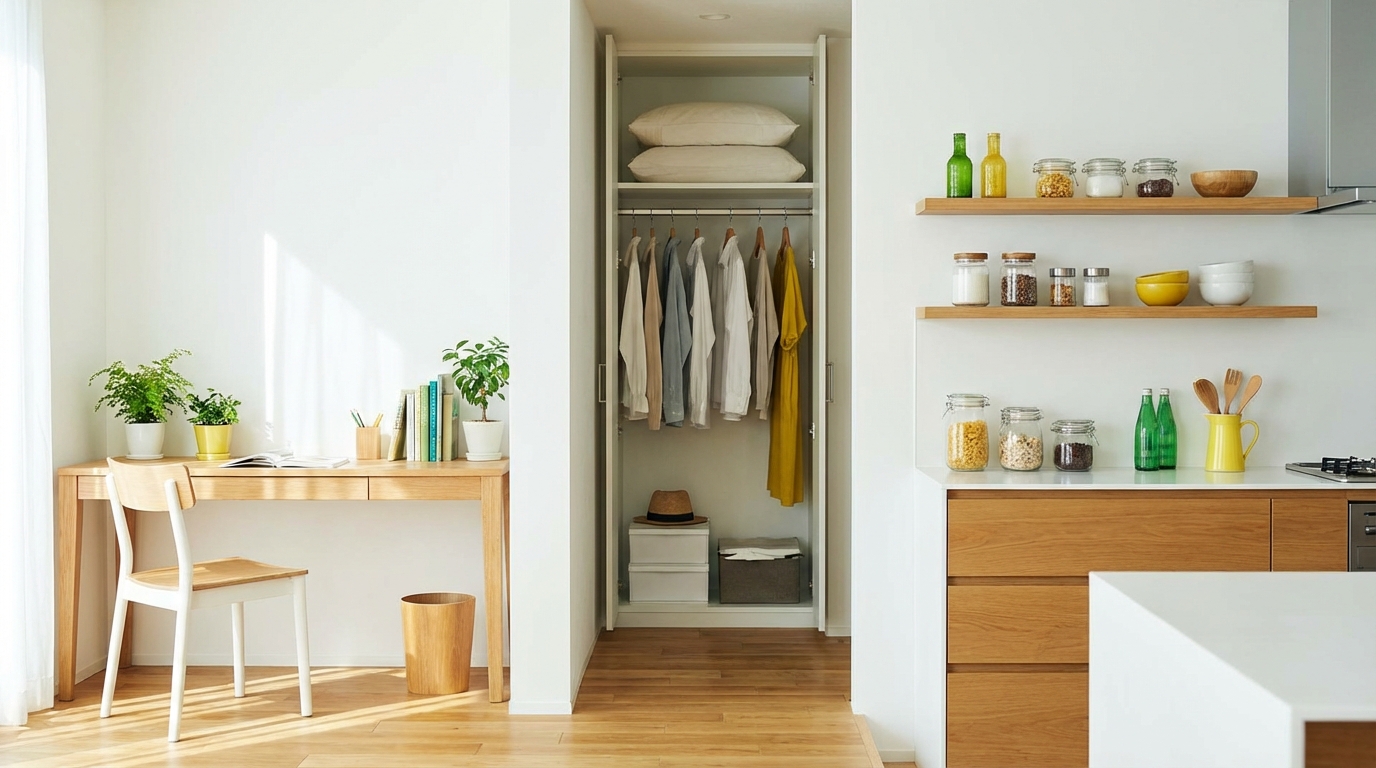
Introduction: The Silent Chaos of Everyday Clutter
Imagine walking through your front door after a long, exhausting day. What is the first thing that greets you? For many, it is not a sense of calm, but a visual assault of piled-up mail on the entryway table, shoes kicked off in random directions, and a kitchen counter buried under appliances, school papers, and miscellaneous items that don't seem to have a home. This is the daily reality of living with clutter. It is a subtle, persistent drain on your energy, a silent to-do list that screams for attention the moment you try to relax.
We live in a culture obsessed with acquisition. We are constantly told that buying more will make us happier, more successful, or better prepared for the future. The result is homes bursting at the seams with belongings we rarely use, don't truly love, and spend valuable time cleaning around, organizing, or looking for. The daily problems are manifold: the frantic morning search for keys, the stress of having unexpected guests because the house is a mess, the duplicate purchases because you couldn't find the original item, and the underlying anxiety that comes from living in chaotic surroundings.
But there is an alternative route, one that leads to peace, clarity, and more time for what truly matters. The solution lies in adopting decluttering hacks for a minimalist home. Moving toward minimalism isn't about living in stark, empty white rooms or owning precisely 100 items. It is about intentionality. It is the conscious decision to surround yourself only with things that serve a purpose or bring you genuine joy, and ruthlessly eliminating the rest. This comprehensive guide will walk you through practical, psychological, and actionable hacks to transform your cluttered space into a minimalist sanctuary.
Understanding the Weight: Why We Hold On
Before diving into the practical hacks, it is crucial to understand why we accumulate clutter in the first place. Decluttering is often 20% physical labor and 80% emotional work. We attach sentiments to objects, making it incredibly difficult to let go. You might keep that bulky sweater because your aunt knitted it for you ten years ago, even though it scratches and you've never worn it. You might hold onto broken electronics because you plan to fix them "someday," or keep stacks of magazines because they contain information you might need in an undefined future.
This is where the minimalist mindset is essential. Minimalism challenges us to confront these attachments. It asks us to differentiate between the memory and the object. The memory of your aunt's kindness exists independently of the itchy sweater. A photograph of a sentimental item can often serve the same purpose as the item itself, without taking up physical space. Recognizing these emotional anchors is the first step toward breaking free from them. The following hacks are designed not just to move stuff out of your house, but to help you navigate the mental hurdles that have kept that stuff there for years.
Core Decluttering Hacks for a Minimalist Home
To achieve a minimalist home, you need strategies that go beyond standard spring cleaning tips. You need hacks that change your habits and reshape your relationship with your possessions.
1. The "One In, Two Out" Rule
The most significant threat to a tidy home is the constant influx of new items. Maintenance is harder than the initial purge. The "One In, Two Out" rule is a powerful hack to reverse the accumulation trend. The concept is simple: for every single new item you bring into your home, two existing items must leave.
Did you buy a new pair of jeans? Great. Now go to your closet and identify two older pairs that don't fit perfectly, have worn-out knees, or simply aren't your style anymore, and donate them. Did you buy a new kitchen gadget? Find two older utensils or appliances that are gathering dust in the back of a drawer and let them go. This hack does two things simultaneously: it actively reduces your total inventory over time, and it forces you to pause before making a purchase. Knowing you have to sacrifice two current possessions makes you seriously evaluate if that new item is truly worth it.
2. The Reverse Hanger Method
Clothing is a massive source of clutter for most people. We wear 20% of our clothes 80% of the time, yet our closets are stuffed with the other 80%. The Reverse Hanger Method is an objective, undeniable way to identify what you actually wear.
Start by taking every item hanging in your closet and turning the hanger backward so the open hook faces you. When you wear an item, return it to the closet with the hanger facing the correct, normal way. After three to six months, scan your closet. Any hangers still facing backward represent clothes you have not touched in months. These are prime candidates for donation. This hack removes the guesswork and emotional rationalization ("Oh, I wear this all the time!") and presents you with cold, hard data about your wardrobe habits.
3. The "Maybe" Box Purgatory
Decision fatigue is real. When decluttering, you will inevitably encounter items that stump you. You don't use them, but you're afraid to throw them away "just in case." Instead of letting these items stall your progress, utilize the "Maybe" Box.
Get a cardboard box and put all these indecisive items inside. Tape the box shut and write the date on the outside, exactly six months from today. Store the box in a garage, attic, or deep closet—somewhere out of sight. If, during those six months, you genuinely need an item from the box, go get it. It has proven its worth. However, if the date arrives and you haven't opened the box, this is proof that you can live without those items. Do not open the box to reconsider. Simply load it into your car and take it to a donation center. The time away breaks the emotional bond and proves the items are non-essential.
4. The 20/20 Rule for "Just in Case" Items
Popularized by The Minimalists, this rule is essential for tackling those items we keep for hypothetical emergencies. We often hold onto duplicates of common household goods, extra cables, or niche tools because we fear needing them someday and not having them. The 20/20 rule states: If you can replace an item for less than $20 in less than 20 minutes from your current location, you do not need to hoard it.
This rule helps you realize that we live in a world of convenience. You don't need to be your own hardware store or pharmacy. The psychological relief of letting go of "just in case" items often far outweighs the minor inconvenience or cost of having to replace a low-value item on the rare occasion you might actually need it again. This hack frees up immense amounts of drawer and shelf space.
5. The Flat Surface Zero Policy
Clutter attracts clutter. A single piece of mail left on a dining table seems to signal to everyone in the house that this surface is a dumping ground. Before you know it, the table is covered. The Flat Surface Zero policy is a daily maintenance hack to prevent this.
Designate key flat surfaces in your home—kitchen counters, dining tables, coffee tables, and entryway consoles—as "no-fly zones" for clutter. Nothing is allowed to live on these surfaces permanently except perhaps one or two intentional decorative items (like a fruit bowl or a plant). Every evening before bed, ensure these surfaces are completely clear. Waking up to clear counters sets a calm tone for the entire day and makes cleaning significantly easier.
Room-by-Room Minimalist Tactics
While the core hacks apply generally, different rooms present unique challenges. Here are specific strategies for key areas of the home.
The Kitchen: The Heart of the Home (and Clutter)
The kitchen is often the hardest working room in the house, and consequently, the quickest to get messy. Minimalist kitchens are highly functional because everything is accessible.
- The Gadget Cull: Be honest. Do you really need an avocado slicer, an egg separator, and a garlic press? A good chef's knife can do all of those jobs. Eliminate uni-taskers that take up valuable drawer space.
- The Tupperware Matching Game: Pull out every food storage container and lid you own. Match them up. Recycle any containers without lids and throw away any lids without containers. Immediately reduce this category by at least 30%.
- Decant Pantry Staples: Visual noise is a form of clutter. Half-empty cereal boxes, bags of flour, and snack wrappers create visual chaos in a pantry. Decanting staples into clear, matching glass or plastic jars not only keeps food fresher but looks instantly organized and calming. It also lets you see exactly how much you have left, preventing overbuying.
The Living Room: Reclaiming Relaxation
The living room should be a space for rest and connection, not a storage facility for toys, magazines, and electronics.
- Digital Declutter: Do you still have a massive collection of DVDs or CDs that you never watch or listen to because everything is streaming? It's time to let the physical media go. Rip them to a hard drive if you must keep the content, and donate the discs.
- Manage Cables: Nothing ruins the visual lines of a room like a rat's nest of black cables under the TV. Use cable ties, sleeves, or a cable management box to hide cords. It is a small change that makes a massive visual difference.
- Curate Decor: Minimalism doesn’t mean having no personality. It means curating it. Instead of having 20 knick-knacks dusting on a shelf, choose your three absolute favorites and display them prominently. They will have more impact when they aren’t fighting for visual attention.
The Bathroom: Simplifying Self-Care
Bathrooms are notorious for accumulating half-used products and expired medications.
- The Expiry Date Audit: Go through your medicine cabinet and makeup bag. Check expiry dates on everything: pills, sunscreens, lotions, and cosmetics. Safely dispose of anything expired. Old makeup harbors bacteria, and expired meds lose potency.
- The "Daily Use" Tray: Clear your vanity counters. Only keep the items you use literally every single morning on the counter, perhaps organized on a nice tray. Everything else—the weekly face mask, the special occasion hair product—should be stored in drawers or cabinets below.
- Towel Reduction: How many towels does a household really need? A good rule of thumb is two per person, plus two for guests. Animal shelters are often thrilled to receive donations of excess old towels.
The Profound Benefits of a Minimalist Home
Implementing these decluttering hacks for a minimalist home is hard work, but the payoff is immense and life-changing. It goes far beyond just having a tidy house to show off to guests.
1. Drastically Reduced Cleaning Time:
This is perhaps the most immediate benefit. When you have less stuff, you have less to clean, less to dust around, and less to move before you can vacuum. Cleaning a clear counter takes seconds; cleaning a counter covered in appliances and papers takes dozens of minutes. You reclaim hours every week that were previously spent managing your possessions.
2. Financial Freedom:
Minimalism changes your spending habits. When you stop buying things to fill an emotional void or because they are on sale, you save significant amounts of money. Furthermore, by taking care of the fewer, higher-quality items you do keep, you replace things less often. You also stop buying duplicates of things you already own but couldn’t find in the mess.
3. Improved Mental Clarity and Reduced Anxiety:
Our outer environments reflect our inner states. A cluttered home leads to a cluttered mind. Visual chaos sends constant signals to our brains that work isn't done, leading to low-level chronic stress. A minimalist, organized environment acts as a calm anchor. Knowing exactly where everything is reduces daily frustration, and the visual space allows your mind to rest and focus on the task at hand rather than the surrounding mess.
4. More Time for What Matters:
Ultimately, minimalism is about making room for life. The time you used to spend shopping for, organizing, cleaning, and looking for stuff can now be spent on hobbies, experiences, spending time with loved ones, or simply resting. You shift your focus from accumulating possessions to creating memories.
Conclusion: The Ongoing Journey to Simplicity
Embracing decluttering hacks for a minimalist home is not a one-time weekend project; it is a lifestyle shift. It is a continuous process of editing your life and curating your environment to serve your highest values. You will have setbacks. Clutter will try to creep back in during busy seasons of life. That is normal. The key is to return to these foundational hacks and principles.
Start small. Do not try to declutter your entire house in a day, as this will lead to burnout. Pick one drawer, one shelf, or one corner, and apply these techniques. Celebrate that small victory. As you begin to feel the lightness and freedom that comes with letting go, the momentum will build. Your home should be a sanctuary that recharges you, not a storage unit that drains you. By clearing the physical clutter, you are creating space for a richer, more intentional, and peaceful life.