Introduction: The Dream vs. The Daily Grind
We all share the same dream. It visits us during tedious Tuesday afternoon meetings, while stuck in endless commuter traffic, or when staring at the rain streaking down the office window. It is the dream of escape. We fantasize about sipping espresso in a Roman piazza, hiking the rugged trails of the Andes, or navigating the neon-lit streets of Tokyo. Travel isn’t just a luxury; for many, it is a necessary recalibration of the soul—a way to break the monotony of the daily grind and reconnect with a wider world.
However, the intoxicating allure of wanderlust often crashes hard against the jagged rocks of reality. The two most significant barriers standing between us and our dream destinations are universal: **money and time**. The modern world demands so much of both. We are conditioned to believe that travel is an expensive indulgence reserved for the wealthy or the retired. We look at flight prices and wince, calculating how many months of rent that ticket to Bali could cover. We look at our meager allotment of paid time off (PTO) and wonder how we can possibly squeeze a meaningful experience into ten days a year without jeopardizing our careers.
This paralyzing fear of overspending or wasting precious vacation days often leads to inaction. The dream remains just a dream, filed away under “someday.” But what if the barriers weren’t as insurmountable as they seem? What if the difference between dreaming of travel and actually doing it wasn’t a massive bank account, but rather a different skillset?
Enter the world of **travel hacks to save money and time**. These aren’t just corner-cutting tips for backpackers on a shoestring; they are strategic approaches to maximizing resources. Travel hacking is a mindset shift. It is moving from being a passive consumer of overpriced tourism packages to an active, savvy navigator of the global travel ecosystem. By leveraging the right tools, timing, and techniques, you can unlock a world where more frequent, higher-quality travel is not only possible but attainable on an average income and a standard vacation schedule. This guide will serve as your comprehensive blueprint to breaking free from the constraints of traditional travel booking and stepping into a world of smarter, more efficient adventure.
Section 1: The Pre-Trip Phase – Mastering the Booking Game
The battle for your budget and time is often won or lost long before you pack your bags. The booking phase is rife with pitfalls designed by an industry that thrives on consumer ignorance. To become a master traveler, you must first master the systems used to sell travel.
The Art of Flight Hacking
Flights are usually the single biggest expense of any international trip. Most people simply type their dates and destination into a major search engine and book the first “reasonable” option they see. This is a mistake that costs hundreds, sometimes thousands, of dollars. True flight hacking involves flexibility and strategic tool usage.
First, abandon rigid dates. If you *must* fly from July 15th to July 22nd, you are at the mercy of the airlines. The holy grail of flight searching is flexibility. Use tools like Google Flights or Skyscanner and utilize their “whole month” or “cheapest month” views. You will often find that flying on a Tuesday instead of a Friday can save you 30% instantly. Furthermore, be flexible with your destination. If you just want to go to “Europe” in the autumn, use the “Explore” map feature on Google Flights. Put in your departure city, leave the destination blank, and see where the cheapest flights are landing. You might find a $400 roundtrip ticket to Milan when you were originally looking at $900 tickets to Paris. Once you are in Europe, budget airlines and trains make moving around cheap and fast.
Another advanced technique is utilizing **positioning flights**. If you live in a secondary market like Cleveland or Sacramento, flying directly internationally is expensive. Instead, look for a cheap domestic flight on a budget carrier to a major hub like New York (JFK), Los Angeles (LAX), or Chicago (ORD). From there, book a separate international ticket. Even with the cost of the two separate tickets, the total is often significantly lower than a single itinerary from your home airport. Just ensure you leave plenty of time—at least 4-5 hours—between flights, as you will likely need to re-check bags and go through security again. This hack saves money but requires a time buffer to manage risk.
Accommodation Beyond Hotels
Traditional hotels are convenient, but they consume budgets rapidly. To save substantial amounts of money, you must look beyond the standard hotel room. The rise of the sharing economy has changed everything, but even platforms like Airbnb have become expensive with cleaning fees and service charges. The savvy traveler looks deeper.
Consider **house sitting**. Platforms like TrustedHousesitters connect homeowners who are going away with travelers willing to care for their pets and property in exchange for free accommodation. This is a massive money saver, especially for longer trips in expensive cities like London or Sydney. You get a full kitchen, living space, and the company of a pet, all for the cost of an annual membership fee that is usually less than one night in a hotel. This isn’t just about saving money; it provides a deeper, more local experience that a sterile hotel room never could.
If you prefer the social aspect of travel, do not dismiss modern **hostels**. Forget the dingy dorm rooms of the past. Today’s “boutique hostels” offer private rooms with en-suite bathrooms that rival mid-range hotels at a fraction of the price, plus they have social common areas and communal kitchens that allow you to save money by cooking some meals. Alternatively, if you find a boutique hotel you love on a booking aggregator, try calling them directly. Hotels pay significant commissions to booking sites. If you call and offer to book directly, they will often match the price and throw in free breakfast or a room upgrade because they get to keep the full amount.
Strategic Timing: The Shoulder Season
Time is money, but timing is everything. The single greatest travel hack for both saving money and having a better experience is traveling during the **shoulder season**. This is the sweet spot between the peak high season (usually summer and major holidays) and the dreary low season. Think Europe in May or October, or Southeast Asia in November.
During shoulder season, the weather is generally still pleasant, but the massive crowds of tourists have either not yet arrived or have just left. This means flight prices drop, accommodation availability soars, and you don’t have to waste precious vacation hours standing in two-hour lines to enter a museum or get a table at a restaurant. Traveling during peak season is a double whammy of high costs and wasted time waiting in queues. Shoulder season travel optimizes both resources simultaneously.
Section 2: The Preparation Phase – Packing and Planning for Efficiency
Once the trip is booked, the preparation phase begins. How you pack and how you plan your itinerary will directly dictate how much time and money you waste while on the ground. Inefficiency here leads to stress later.
The Carry-On Only Philosophy
If you want to save significant time and money, you must embrace the **carry-on only** lifestyle. This is not just about avoiding the $30-$60 checked bag fees charged by many airlines each way. The real benefits are in time and mobility.
When you land after a long flight, while everyone else is rushing to the baggage carousel to stand around for 45 minutes hoping their luggage arrived, you are already bypassing customs and on your way to the city center. You have effectively bought yourself an extra hour of vacation. Furthermore, traveling with only a carry-on makes you agile. You can easily navigate public transportation, hop on trains, and walk over cobblestone streets to your accommodation without lugging a massive suitcase. This mobility saves you from having to rely on expensive taxis everywhere you go.
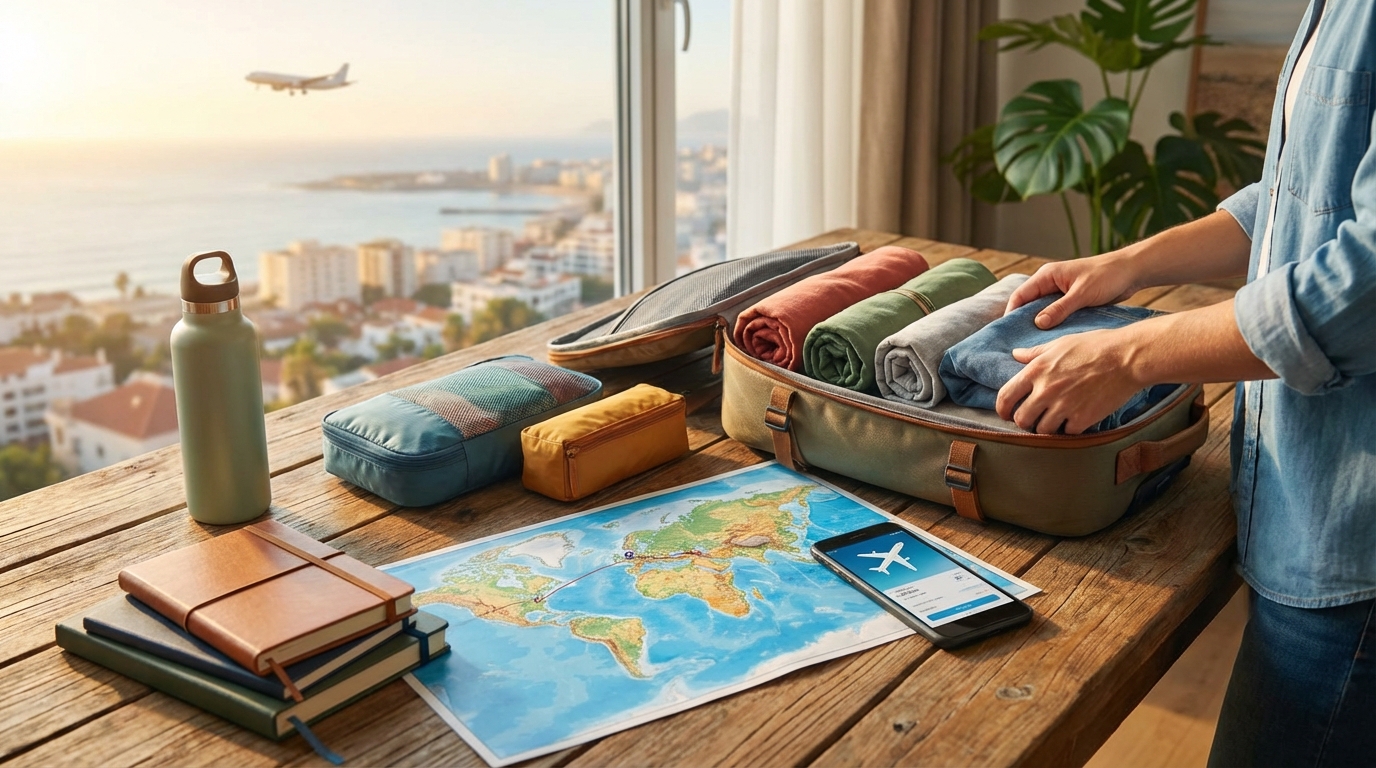
Mastering carry-on travel requires discipline. Invest in packing cubes to compress your clothing. Choose a versatile wardrobe with neutral colors that can be layered and mixed to create multiple outfits. Understand that you can do laundry on the road—either in your Airbnb sink or at a local laundromat for a few dollars. The freedom of traveling light is incomparable and a massive time-saver.
Itinerary Efficiency and Skip-the-Line
Many travelers waste hours every day zigzagging across a city because they didn’t plan their route efficiently. Group your sightseeing geographically. If you are in Paris, dedicate one day to the Latin Quarter and Notre Dame area, and another to the Eiffel Tower and surrounding museums. Don’t bounce between them on the same day, wasting precious time on the metro.
More importantly, you must pre-book **skip-the-line tickets** for major attractions. The Vatican Museums, the Louvre, the Colosseum—these places have ticket lines that can stretch for three hours during peak times. Standing in line is the absolute worst use of your limited vacation time. Spending a few extra dollars online weeks in advance to secure a timed entry slot is perhaps the best time-saving investment you can make. You show up at your designated time and walk right in, maximizing your hours for actual experiences rather than waiting.
Essential Digital Tools
Your smartphone is a powerful travel tool if used correctly. Before you leave wifi, download offline maps on Google Maps for the cities you are visiting. Data roaming charges are a massive waste of money, and relying on finding free wifi is a massive waste of time. With offline maps, you can navigate perfectly in airplane mode, finding your hotel or that hidden restaurant without stress.
Install a reliable **currency converter app** (like XE Currency) so you know exactly what things cost in your home currency, preventing you from overspending due to confusing exchange rates. Also, download local transport apps (like Citymapper or local metro apps) to figure out public transit routes instantly, saving you from staring confusedly at complex subway maps.
Section 3: The On-The-Ground Phase – Navigating Like a Local
You’ve arrived. Now the goal is to navigate your destination efficiently and affordably. The biggest mistake tourists make is trying to replicate their home comforts abroad, which comes at a premium. The hack here is to live, eat, and move as the locals do.
Transportation Triumphs
Taxis from the airport are arguably the biggest rip-off in travel. Almost every major city has efficient train or bus links from the airport to the city center for a fraction of the taxi cost. Do your research before you land. Know exactly which train to take and how to buy a ticket. You will often beat the taxi that is stuck in airport traffic anyway.
Once in the city, master public transit. Metro systems in cities like Tokyo, London, and Berlin are faster and cheaper than Ubers. Purchase multi-day transit passes instead of single-ride tickets to save money and the time spent queuing at ticket machines before every ride. For shorter distances, walk! It’s free, healthy, and the best way to stumble upon hidden gems you’d miss in a car. If you must use ride-sharing, be aware that in many countries, apps like Bolt or Grab are significantly cheaper than Uber.
Dining Smart Without Deprivation
Food is a major highlight of travel, but eating three meals a day in sit-down restaurants near major tourist attractions will obliterate your budget. These “tourist trap” restaurants are usually overpriced and serve mediocre food. The hack is to eat where the locals eat.
Embrace **street food**. In Asia and Latin America, street food is not only incredible and authentic but also incredibly cheap and generally safe if you choose busy stalls where the food is cooked fresh in front of you. In Europe, seek out bakeries for breakfast and utilize “lunch specials” (menu del día in Spain, formule du midi in France). Many high-quality restaurants offer a fixed-price menu at lunch that is half the price of their dinner menu for similar food. For dinner, venture away from the main squares. Walk five blocks in any direction away from the tourist hub, and prices will drop while quality often rises.
Another massive money saver is utilizing local grocery stores. If you have a hostel kitchen or Airbnb, cook a few dinners yourself. Even if you don’t have a kitchen, buying yogurt, fruit, and pastries from a supermarket for breakfast is vastly cheaper than a hotel buffet. A picnic in a beautiful park with local cheese, bread, and wine from a grocery store can be one of your most memorable and affordable meals.
Money Matters: The Hidden Fees
Banks love travelers who don’t plan. Foreign transaction fees and bad ATM exchange rates can silently siphon off 5-10% of your total trip budget. The first step is to obtain a **credit card with no foreign transaction fees**. Use this for absolutely everything you can. It gives you the best exchange rate (the interbank rate) and charges zero extra percentage fees.
However, you will always need some cash. When using an ATM abroad, never—under any circumstances—accept the machine’s offer to “charge in your home currency.” This is a scam known as **Dynamic Currency Conversion (DCC)**. The ATM owner sets a horrendous exchange rate and pockets the difference. Always select “charge in local currency” and let your home bank handle the conversion. Furthermore, use ATMs attached to actual banks during opening hours, rather than random ATMs on street corners, to reduce the risk of card skimmers and high fees. To save time, pull out larger amounts of cash less frequently to avoid constantly hunting for ATMs and paying multiple withdrawal fees.
Section 4: The Long Game – Loyalty and Lifestyle Shift
The ultimate travel hacks go beyond a single trip. They involve building systems that reward you over time and shifting your mindset toward long-term travel sustainability.
Leveraging Credit Card Points and Miles
This is the heavy artillery of travel hacking. If you have good credit and can manage your finances responsibly (paying off balances in full every month), credit card rewards are the fastest route to free travel. The strategy involves signing up for travel rewards credit cards when they offer massive **sign-up bonuses** (e.g., 60,000 to 100,000 points after spending a certain amount in the first three months).
By putting your normal, everyday spending—groceries, gas, utilities, insurance—on these cards to hit the minimum spend requirement, you earn enough points for free international flights or many nights in high-end hotels. The hack is not to spend *more* money, but to shift the spending you are already doing onto cards that reward you for it. Savvy travel hackers rotate through cards, earning multiple bonuses a year, effectively flying for nearly free on most of their vacations. This saves thousands of dollars and opens up destinations that would otherwise be unaffordable.
The Mindset Shift: Slow Travel
Finally, the most profound hack to save money and time is a philosophical one: **slow down**. The modern urge to visit ten cities in twelve days is inefficient and expensive. You spend half your time in transit—checking in and out of hotels, rushing to train stations, sitting in airports. You are constantly paying for transportation and never truly get to know a place.
Slow travel—staying in one region or city for a week or two—is incredibly cost-effective. You get weekly discounts on Airbnb rentals. You learn the local transit system and cheap places to eat. You stop hemorrhaging money on long-distance trains or flights every two days. Most importantly, you stop wasting time in transit. You actually have time to relax, absorb the culture, and have a meaningful experience. You save money by doing less, and gain time by not constantly moving. It’s a paradox that transforms travel from a stressful checklist into a rejuvenating experience.
Conclusion: Reclaiming Your World
The barriers of time and money are real, but they are not unbreakable. By adopting these travel hacks to save money and time, you are not just being frugal; you are being strategic. You are refusing to accept the overpriced, inefficient default options presented by the travel industry.
Every dollar saved on baggage fees or foreign transaction fees is a dollar toward your next plane ticket. Every hour saved by skipping a line at a museum or breezing through an airport with only a carry-on is an extra hour spent sipping wine by the Seine or watching the sunset over Kyoto. Implementing these strategies requires some initial effort—a change in how you search for flights, a commitment to packing light, a bit of research into local transit—but the payoff is immense.
The benefits extend beyond just bank balances. You gain confidence in your ability to navigate the world on your own terms. You move from being a tourist to a traveler. So, open up that incognito browser tab, grab your packing cubes, and start planning. The world is waiting, and it’s cheaper and more accessible than you ever imagined.